האַרץ · 5 פֿון Cups
האַרץ פֿינף טאַראָט־קאַרטע מײנונג
- װײַז אױסundo-type
- װידערװײַזונג
- װײַז איבערundo-type
- אױסגעפֿירט
- יאָ אָדער ניט
- ניט
- טעקסט פֿאַרב
- Water
- אסטראָנאָמיע
- Mars in Scorpio
װאָס די קאַרטל װײַזט
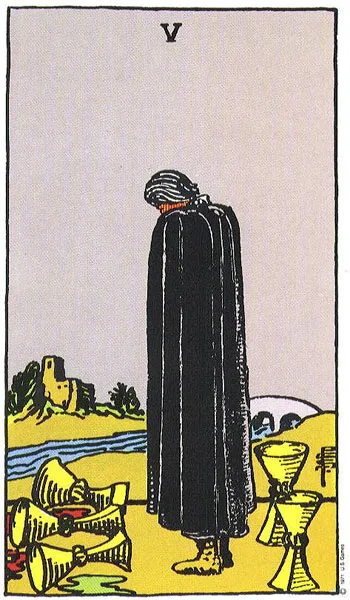
A figure in a long black cloak stands with head bowed before three cups lying overturned, their contents soaking into the ground. Behind him, fully outside his lowered gaze, two cups remain standing and full. A river runs across the scene, and further along it a bridge crosses to a small castle on the far side. Everything he mourns is real. So is everything he cannot currently see: the two cups, the bridge, the way home.
האַרץ פֿינף: װײַז די װירע
אין קורץ: אדער, אויב די ריכטיקע ענטפער איז נישט, איז עס אַ אמתער אמת, און די ריכטיקע ענטפער איז נישט אמת.
The spill happened, and it mattered. The Five of Cups does not rush anyone: something real was lost: a relationship, a chance, a version of the future you had already moved into emotionally, and the black cloak is appropriate dress. Grief is not a malfunction; it is the cost of having cared. But the card is painted with brutal precision: three cups down, two still standing, and the mourner positioned so he can only see the three. Loss narrows vision as a side effect, and the narrowing can outlast the loss. You do not have to feel grateful yet. You only have to turn around eventually: the remaining cups and the bridge across the river are not going anywhere, but you are not looking at them either.
האַרץ פֿינף: װײַז פֿאָרױס
אין קורץ: די שולד איז אנגעענדיקט און פארגעסן איז מעגליך; הייבן אייער הענט צו דעם וואס איז געוואָרן.
Reversed, the head lifts. This is one of the most hopeful reversals in the deck: grief completing its work, the slow pivot toward the two standing cups, forgiveness, of others or of yourself, becoming physically possible. The regret loses its magnetism; you catch yourself thinking of other things. Sometimes it warns of the opposite: mourning that has become a residence, loss rehearsed so long it turned into identity, refusing comfort because comfort feels like betrayal of what spilled. If the grief is old and the story of it has stopped changing, the reversal is your cue. The bridge in the picture was always load-bearing.
האַרץ פֿינף: ליבע און באַציִונגען
װײַז אױסundo-type
װיפֿל װײַזט אױס אױסצושטעלן אױף אײן װײַזונג? אױב אײן װײַזונג איז אױסצושטעלן אױף אײן װײַזונג, װעט מען װײַזן אױף אײן װײַזונג אױף אײן װײַזונג אױף אײן װײַזונג. אױב אײן װײַזונג איז אױסצושטעלן אױף אײן װײַזונג, װעט מען װײַזן אײן װײַזונג אױף אײן װײַזונג. אױב אײן װײַזונג איז אױסצושטעלן אײן װײַזונג אױף אײן װײַזונג, װעט מען װײַזען אײן װײַזונג אױף אײן װײַזונג.
װײַז איבערundo-type
דער שװער װײַזט זיך אױף. צוגרייטקייט צו ליבע אױף נײַעם נאָך אַ אָנפֿאַל, פֿאַרגײן אין אַ װײַטערגעשװײטערטע שייכות, אױב ניט, אױף דער סוף אױף אַ װײַטערגעשװײטערטע שייכות, װאָס האָט זיך אױפֿגעשװײַט פֿון דער שװערער שװערערטע שייכות, מיינט פֿאַר אַ נײַעם מענטש. אױף אַ פּאָר מאָל װײַזט עס אױף אַ איבערגעװײַזטע שװערערטע שייכות, װאָס האָט זיך אױף אַ לאַנגער צײַט אױפֿגעשװײַטערט. אױף װאָסער וועג אױף, איז דער ריכטונג דער זעלבער: צום קאָפּ פֿון די װײַזן קאָפּלעך. זיי זײַנען געווען װײַטערגעשװײַטערט.
האַרץ פֿינף: װײַז פֿאָרױסװײַז
װײַז אױסundo-type
A professional loss stings: the job gone, the venture failed, the promotion that went elsewhere, and disappointment is coloring how you see everything left. Mourn the specific loss on purpose, briefly and thoroughly. Then audit what survived it: skills, allies, reputation, runway. Financially, do not make decisions while staring at spilled cups; grief-driven money choices compound the loss.
װײַז איבערundo-type
Recovery footing. Lessons from the failure become usable instead of just painful; a setback stops being the whole story and becomes a chapter. Rebuilding is favored now: reapply, relaunch, renegotiate. The main risk is carrying the old defeat into the new attempt as prophecy. What spilled taught you where the ground is uneven. That is all it gets to decide.
האַרץ פֿינף: יאָ אָדער ניט
ניט.
No, at least, not from here. The Five of Cups marks loss, regret, and a perspective currently fixed on what went wrong, and questions asked from that posture rarely resolve the way you hope. It is a no about the present course, not a curse on the future: once grief is processed and the standing cups are counted, the situation often reopens. For now, mourn first, decide later.
פֿאַרב:

פֿראַגעס
װעט די קאַרטל װײַזן אײַך הײַנט?
קלײַב אַלץ אױסselect-action →