پاڙن جا جُڳ. · 5 يا Cups
پاڙھ جي پنجي تاروٽ ڪارڊ جو مطلب
- ڦيرگھير
- ڏک، نقصان، ارمان، غم، جيڪي خرچ ڪيو، نظرانداز ڪيو، باقي رھيو.
- ڦيرايو
- قبول ڪندڙ، توبه ڪندڙ، معاف ڪندڙ، ڏک ۾ ڦاٿل.
- ھائو يا نه
- نه
- عنصر
- Water
- نجوميات
- Mars in Scorpio
ڪارڊ ڇا ڏيکاريندو آھي
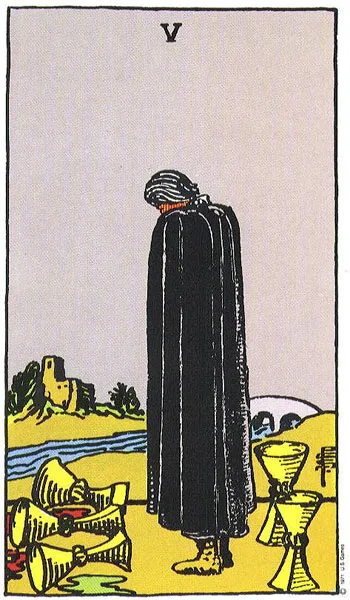
هڪ ڊگهي ڪارو ڪپڙو پائي هڪ شخص بيٺو آهي، جنهن جو سر هيٺ ڪري، ٽي پيپ کڻي رکيل آهن، جن جي اندرين حصن کي زمين ۾ ڦاٽيو ويو آهي. سندس پويان، سندس نظر جي پوري حد کان ٻاهر، ٻه پيپ بيٺل ۽ ڀريل آهن. هن منظر ۾ هڪ نديءَ جي ڪناري تي هڪ ڍنڍ وھندي آهي، ۽ ان کان اڳتي هڪ پل آهي، جيڪا هڪ ننڍڙي قلعي جي پاسي کان گذري ٿي. سڀ ڪجهه، جنهن تي هو ڏک ڪري ٿو، سچو آهي. ۽ سڀ ڪجهه، جيڪو هو ڏسي نه ٿو سگهي، سچو آهي: ٻه پيپ، پل، گهر جي واٽ.
پاڙھ جي پنجي: آخري
مختصر: Something real was lost and grief is the right response. Mourn it, but don't miss the two cups still standing.
The spill happened, and it mattered. The Five of Cups does not rush anyone: something real was lost: a relationship, a chance, a version of the future you had already moved into emotionally, and the black cloak is appropriate dress. Grief is not a malfunction; it is the cost of having cared. But the card is painted with brutal precision: three cups down, two still standing, and the mourner positioned so he can only see the three. Loss narrows vision as a side effect, and the narrowing can outlast the loss. You do not have to feel grateful yet. You only have to turn around eventually: the remaining cups and the bridge across the river are not going anywhere, but you are not looking at them either.
پاڙھ جي پنجي: ڦيرائڻ
مختصر: غم ختم ٿي ويو آهي ۽ بخشش ممڪن آهي، جيڪو باقي رھيو آھي ان ڏانھن پنھنجو ڪنڌ مٿي ڪريو.
Reversed, the head lifts. This is one of the most hopeful reversals in the deck: grief completing its work, the slow pivot toward the two standing cups, forgiveness, of others or of yourself, becoming physically possible. The regret loses its magnetism; you catch yourself thinking of other things. Sometimes it warns of the opposite: mourning that has become a residence, loss rehearsed so long it turned into identity, refusing comfort because comfort feels like betrayal of what spilled. If the grief is old and the story of it has stopped changing, the reversal is your cue. The bridge in the picture was always load-bearing.
پاڙھ جي پنجي: لاڳاپا
ڦيرگھير
Heartbreak, or its long shadow: a breakup being actively grieved, a betrayal not yet metabolized, or an old loss quietly running your current relationship from the back seat. The card honors the pain and asks one thing of you: do not let three spilled cups convince you all five are gone. What remains, in this relationship or in your capacity for the next, is more than the grief is currently reporting.
ڦيرايو
The mourning lifts. Readiness to love again after loss, forgiveness inside a strained relationship, or finally releasing an ex whose memory occupied the chair meant for someone new. Occasionally it flags grief overstayed: still defining yourself by a relationship that ended long ago. Either way the direction is the same: face the standing cups. They have been patient.
پاڙھ جي پنجي: پئسا
ڦيرگھير
هڪ پرائيويٽ نقصان زخمي ڪري ٿو- ڪم وڃايو، venture ناڪام، ترقي جيڪا ٻي هنڌ وئي- ۽ نااميد رنگ آهي ته ڪيئن توهان سڀ ڪجهه ڇڏي ڇڏيو ڏسي. خاص نقصان تي سوچيو، مختصر ۽ مڪمل طور تي. پوءِ چيڪ ڪريو ته ڇا بچي ويو: مهارتون، اتحادين، سڃاڻپ، روڊ. مالي طور، نه فيصلا ڪرڻ جڏهن ڦاٽي پيا ڪوپ تي نظر رکڻ; ڏک-درآمد پئسا چونڊن نقصان وڌائي.
ڦيرايو
Recovery footing. Lessons from the failure become usable instead of just painful; a setback stops being the whole story and becomes a chapter. Rebuilding is favored now: reapply, relaunch, renegotiate. The main risk is carrying the old defeat into the new attempt as prophecy. What spilled taught you where the ground is uneven. That is all it gets to decide.
پاڙھ جي پنجي: ھائو يا نه؟
نه.
No, at least, not from here. The Five of Cups marks loss, regret, and a perspective currently fixed on what went wrong, and questions asked from that posture rarely resolve the way you hope. It is a no about the present course, not a curse on the future: once grief is processed and the standing cups are counted, the situation often reopens. For now, mourn first, decide later.
لاڳاپيل ڪارڊ

گھڻا پڇيل سوال
هي ڪارڊ اڄ توکي ڳوليندو؟
هيءُ ڪارڊ سڌو پڙهڻ ۾ ڇڏ →