Bihotz-irudia · 5 edo Cups
Bost bihotza Tarot kartaren esanahia
- Bertikalki
- tristuragaltzeadamutzeaisuritakoaahazturik geratu dena negarrez gogoratzea.
- Alderantzizkoa
- Onarpenabuelta emateabarkamenatristura gainditzea
- Bai edo ez
- Ez
- Elementua
- Water
- Astrologia
- Mars in Scorpio
Txartelak erakusten duena
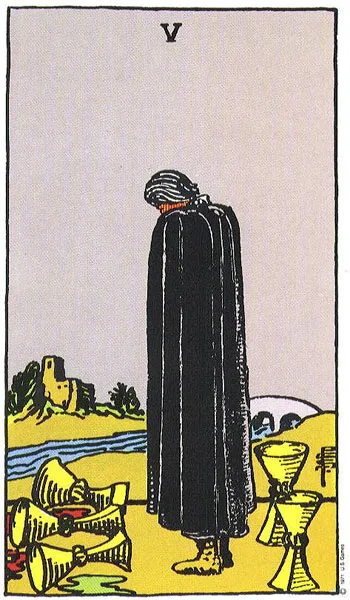
Irudi bat dago, burua makurturik, kapela beltz luzea daramana, hiru koparen aurrean, hauek lurrean murgilduta, eta atzean, begiak behera begiratu gabe, bi kopa daude, zutik eta beteak. Ibai bat igarotzen da eszena zeharkatuz, eta, handik aurrera, zubi bat igarotzen da, urrutiko gaztelu txiki batera. Negar egiten duen guztia erreala da, eta, halaber, une honetan ikusi ezin duen guztia: bi kopa, zubia, etxerako bidea.
Bost bihotza: upright meaning
Laburbilduz: Something real was lost and grief is the right response. Mourn it, but don't miss the two cups still standing.
The spill happened, and it mattered. The Five of Cups does not rush anyone: something real was lost: a relationship, a chance, a version of the future you had already moved into emotionally, and the black cloak is appropriate dress. Grief is not a malfunction; it is the cost of having cared. But the card is painted with brutal precision: three cups down, two still standing, and the mourner positioned so he can only see the three. Loss narrows vision as a side effect, and the narrowing can outlast the loss. You do not have to feel grateful yet. You only have to turn around eventually: the remaining cups and the bridge across the river are not going anywhere, but you are not looking at them either.
Bost bihotza: alderantzizko esanahia
Laburbilduz: Atsekabea amaitzen ari da eta barkamena posiblea bihurtzen ari da; altxa burua geratzen denaren aldera.
Reversed, the head lifts. This is one of the most hopeful reversals in the deck: grief completing its work, the slow pivot toward the two standing cups, forgiveness, of others or of yourself, becoming physically possible. The regret loses its magnetism; you catch yourself thinking of other things. Sometimes it warns of the opposite: mourning that has become a residence, loss rehearsed so long it turned into identity, refusing comfort because comfort feels like betrayal of what spilled. If the grief is old and the story of it has stopped changing, the reversal is your cue. The bridge in the picture was always load-bearing.
Bost bihotza: maitasuna eta harremanak
Bertikalki
Heartbreak, or its long shadow: a breakup being actively grieved, a betrayal not yet metabolized, or an old loss quietly running your current relationship from the back seat. The card honors the pain and asks one thing of you: do not let three spilled cups convince you all five are gone. What remains, in this relationship or in your capacity for the next, is more than the grief is currently reporting.
Alderantzizkoa
The mourning lifts. Readiness to love again after loss, forgiveness inside a strained relationship, or finally releasing an ex whose memory occupied the chair meant for someone new. Occasionally it flags grief overstayed: still defining yourself by a relationship that ended long ago. Either way the direction is the same: face the standing cups. They have been patient.
Bost bihotza: karrera eta dirua
Bertikalki
A professional loss stings: the job gone, the venture failed, the promotion that went elsewhere, and disappointment is coloring how you see everything left. Mourn the specific loss on purpose, briefly and thoroughly. Then audit what survived it: skills, allies, reputation, runway. Financially, do not make decisions while staring at spilled cups; grief-driven money choices compound the loss.
Alderantzizkoa
Recovery footing. Lessons from the failure become usable instead of just painful; a setback stops being the whole story and becomes a chapter. Rebuilding is favored now: reapply, relaunch, renegotiate. The main risk is carrying the old defeat into the new attempt as prophecy. What spilled taught you where the ground is uneven. That is all it gets to decide.
Bost bihotza: Bai edo ez?
Ez.
Ez, ez hemendik aurrera, behintzat. Kopa-Bost-ek galtzea, damutzea eta gaizki joan zenari begirada finkatua adierazten du, eta jarrera horretatik egiten diren galderek gutxitan ematen dute espero duzun erantzuna. Uneko bideari buruzko ezetza da, ez etorkizunari buruzko madarikazioa: pena prozesatu eta zutik dauden kopa guztiak zenbatu ondoren, egoera askotan berriro irekitzen da. Orain, lehenik eta behin, dolu egin, eta gero erabaki.
Erlazionatutako txartelak

Maiz egiten diren galderak
Txartelak aurkituko zaitu gaur?
Eraman txartela irakurketa zuzenean →