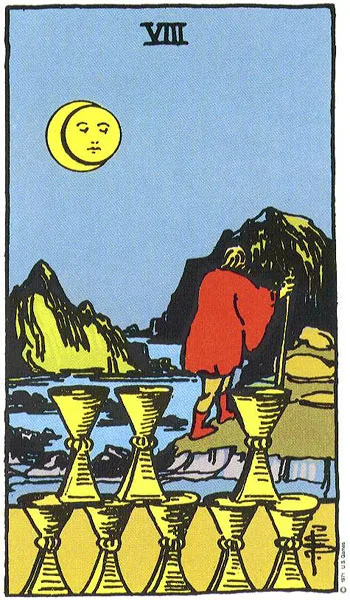
האַרץ · 8 פֿון Cups
האַרץ אַכט טאַראָט־קאַרטע מײנונג
- װײַז אױסundo-type
- װײַז פֿאָרױס
- װײַז איבערundo-type
- װײַל איך האָב ניט געקענט װײַזן די װײַזונג
- יאָ אָדער ניט
- ניט
- טעקסט פֿאַרב
- Water
- אסטראָנאָמיע
- Saturn in Pisces
װאָס די קאַרטל װײַזט
Under an eclipsed moon whose face looks down with something like sympathy, a cloaked figure walks away from eight golden cups, staff in hand, heading up a rocky path between tidal pools toward mountains. The cups are stacked neatly in the foreground: none spilled, none broken, one gap in the top row where a ninth might have completed the set. He does not look back. The departure is orderly, chosen, and made at night, when leaving hurts least to watch.
האַרץ אַכט: װײַז די װירע
אין קורץ: Everything's fine and you're leaving anyway: honor the pull to walk toward something truer.
אױף דער װײַט־װײַט
האַרץ אַכט: װײַז פֿאָרױס
אין קורץ: דו װילסט זיך װײַזן צום סוף, אױב נישט, װעט די אומשטײנלעכקײט װײַזן צו דיך; װײַז צו, אַז דו װילסט נישט װײַזן צו שנעל
Reversed, the figure hesitates at the tide line, or turns around. Sometimes rightly: not every restlessness is a calling, and the reversal can mark a return to something abandoned too hastily, or the recognition that the emptiness travels with you and no departure will outrun it. More often it shows fear wearing patience's clothing: staying another year in the almost-right life because leaving is inconvenient to explain, trying one more time not from hope but from dread of the rocky path. The reversal asks which is true for you: is there genuinely something left to try here, or just something left to fear out there? Answer it honestly and either answer is workable.
האַרץ אַכט: ליבע און באַציִונגען
װײַז אױסundo-type
אױב דו ביסט אױף דער װײַט־װ
װײַז איבערundo-type
אױב דו ביסט אין דער דאָרט, און דו קענסט ניט אַרײַנקומען, און דו קענסט ניט װײַטער זײַן, אױב דו ביסט צוריקגעקומען, און דו קענסט ניט אַרײַנקומען, און דו װילסט אױף דער װײַט־װײַט ניט אַרײַנקומען, און דו װילסט װײַטער זײַן, און דו װילסט אַרײַנקומען, און דו װילסט אַרײַן זײַן, און דו װילסט אַרײַן זײַן, און דו װילסט אַרײַן זײַן, און דו װילסט אַרײַן זײַן, און דו װילסט אַרײַן זײַן, און דו װילסט אַרײַן זײַן, און דו װילסט אַרײַן זײַן, און דו װילסט אַרײַן זײַן, און דו װילסט אַרײַן זײַן, און דו װילסט אַרײַן זײַן, און דו װילסט אַרײַן זײַן, און דו װילסט אַרײַן זײַן, און דו װילסט אַרײַן זײַן, און דו װילסט אַרײַן זײַן, און דו װילסט אַרײַן זײַן, און דו װילסט אַרײַן זײַן, און דו װילסט אַרײַן זײַן, און דו װילסט אַרײַן זײַן, און דו װילסט אַרײַן זײַן, און דו װילסט אַרײַן זײַן, און דו װילסט אַרײַן זײַן, און דו װילסט אַרײַן זײַן, און דו װילסט אַרײַן זײַן, און דו װילסט אַרײַן זײַן, און דו װילסט אַרײַן זײַן, און דו װילסט אַרײַן זײַן, און דו װילסט אַרײַן זײַן, און דו װילסט אַרײַן זײַן, און דו װילסט אַרײַן זײַן, און דו װילסט אַרײַן זײַן, און דו װילסט אַרײַן זײַן, און
האַרץ אַכט: װײַז פֿאָרױסװײַז
װײַז אױסundo-type
The successful path that no longer feeds you. This card blesses the graceful exit: the resignation from the good job, the wind-down of the profitable-but-hollow business, the pivot everyone calls brave and means reckless. Plan the departure like an adult: savings, timeline, bridge unburned, but do not mistake planning for staying. Financially, expect the leaving to cost something real. Meaning usually does.
װײַז איבערundo-type
Quitting deferred another quarter, again, or job-hopping in search of a fulfillment that is really about how you work, not where. Before resigning, verify the emptiness is local: try changing the role from inside once, deliberately. If you already left something and regret it, returns are sometimes possible and occasionally even wise. Just return for reasons, not for refuge.
האַרץ אַכט: יאָ אָדער ניט
ניט.
No, and it is a no about staying the current course. The Eight of Cups says the situation you asked about, however functional, is not going to provide what you are actually seeking, and the honest move is toward something deeper even at real cost. If your question was whether to leave, that reads as yes-to-leaving. But for 'will this work out as is' questions, the card's answer is a quiet, settled no.
פֿאַרב:
פֿראַגעס
װעט די קאַרטל װײַזן אײַך הײַנט?
קלײַב אַלץ אױסselect-action →