Bihotz-irudia · 8 edo Cups
zortziko bihotza Tarot kartaren esanahia
- Bertikalki
- alde egiteazentzu sakonago baten bilanahikoa ona utzibilaketabehar den alde egitea.
- Alderantzizkoa
- irteteko beldurrabeste saiakera bathelbururik gabeko irristaketaitzulera
- Bai edo ez
- Ez
- Elementua
- Water
- Astrologia
- Saturn in Pisces
Txartelak erakusten duena
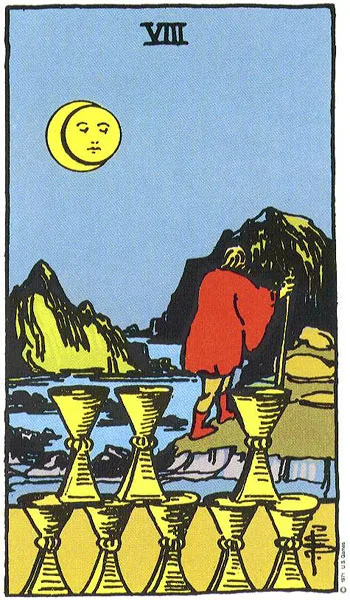
Ilargi eklipsatu baten azpian, aurpegiak sinpatia pixka batekin begiratzen duena, irudi mantoduna urrezko zortzi kopatik aldentzen da, makila eskuan, itsas-igerilekuen arteko bide harritsu batetik mendietarantz abiatuz. Kopak ordena onean pilatuta daude aurrealdean-ez dago isuririk, ez dago apurturik, goiko lerroan hutsune bat dago bederatzigarren batek multzoa osatuko lukeen lekuan. Ez du atzera begiratzen. Irteera ordenatua da, aukeratua, eta gauez egiten da, irtetea ikusteak min gutxien egiten dionean.
zortziko bihotza: upright meaning
Laburbilduz: Everything's fine and you're leaving anyway: honor the pull to walk toward something truer.
Everything is fine, and you are leaving anyway. That is the Eight of Cups' specific, uncomfortable honesty: the cups behind the figure are full and neatly stacked: the workable job, the pleasant relationship, the life that photographs well, and something essential is still missing, and you have finally stopped pretending otherwise. This is not the flight of the Five's grief or the Seven's fantasy; it is the sober departure of someone who gave the situation a fair chance and outgrew it. Saturn in Pisces is exactly this weight: the duty to your own depths. The card does not promise the mountains hold what you seek. It promises the cups do not, and that you already know it.
zortziko bihotza: alderantzizko esanahia
Laburbilduz: Zalantzan zabiltza, edo lasaitasunak jarraituko zaitu; ziurtatu ez zarela presa handiz irteten.
Reversed, the figure hesitates at the tide line, or turns around. Sometimes rightly: not every restlessness is a calling, and the reversal can mark a return to something abandoned too hastily, or the recognition that the emptiness travels with you and no departure will outrun it. More often it shows fear wearing patience's clothing: staying another year in the almost-right life because leaving is inconvenient to explain, trying one more time not from hope but from dread of the rocky path. The reversal asks which is true for you: is there genuinely something left to try here, or just something left to fear out there? Answer it honestly and either answer is workable.
zortziko bihotza: maitasuna eta harremanak
Bertikalki
Someone is emotionally packing, or already gone in every way but logistics. This card marks the departure from relationships that are pleasant and insufficient: no villain, no explosion, just the quiet certainty that staying costs a self. If it is you: leave cleanly and kindly, without manufacturing a crime to justify it. If it may be your partner: the withdrawal you sense is probably real, and worth naming before the walking starts.
Alderantzizkoa
Standing in the doorway, unable to leave and unable to stay well. Or a return: an ex coming back, you going back. That needs one hard question answered first: what has actually changed? The reversal also covers drifting between partners seeking a depth that no partner can supply. Sometimes the thing being fled lives inside, and it makes the trip every time.
zortziko bihotza: karrera eta dirua
Bertikalki
The successful path that no longer feeds you. This card blesses the graceful exit: the resignation from the good job, the wind-down of the profitable-but-hollow business, the pivot everyone calls brave and means reckless. Plan the departure like an adult: savings, timeline, bridge unburned, but do not mistake planning for staying. Financially, expect the leaving to cost something real. Meaning usually does.
Alderantzizkoa
Quitting deferred another quarter, again, or job-hopping in search of a fulfillment that is really about how you work, not where. Before resigning, verify the emptiness is local: try changing the role from inside once, deliberately. If you already left something and regret it, returns are sometimes possible and occasionally even wise. Just return for reasons, not for refuge.
zortziko bihotza: Bai edo ez?
Ez.
Ez, eta ez da uneko bidean jarraitzeari buruzkoa. Bihotz-zortzikoak dio galdetu zenuen egoerak, nahiz eta funtzionala izan, ez duela emango benetan bilatzen duzuna, eta zintzoa den mugimendua zerbait sakonagoa da, baita benetan kostua ere. Zure galdera alde egin ala ez zen bada, hori baiezkoa da alde egiteko. Baina "hau horrela funtzionatuko al du?" galderei, kartaren erantzuna ezezko isil eta erabakia da.
Erlazionatutako txartelak



Maiz egiten diren galderak
Txartelak aurkituko zaitu gaur?
Eraman txartela irakurketa zuzenean →