Suit of Hearts · 6 saka Cups
enam hati Cithakan:Kartu Tarot
- Tegak
- nostalgiakanak-kanakkatresnanreunikatresnan sing diingat
- Dibalik
- ing jaman biyènmemori kang warnane mawarninggal omahluka ing jeroning bocah
- Ya utawa ora
- Ya
- Unsur
- Water
- Astronomi
- Sun in Scorpio
Apa kang ditampilake ing kartu
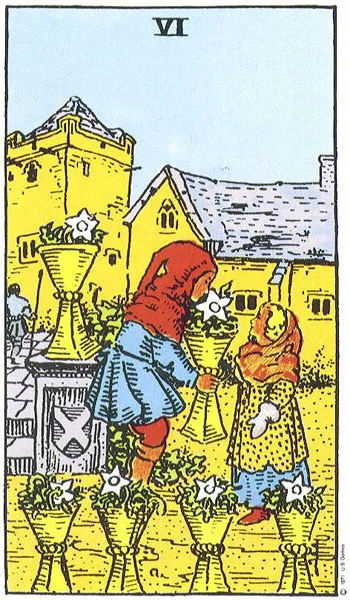
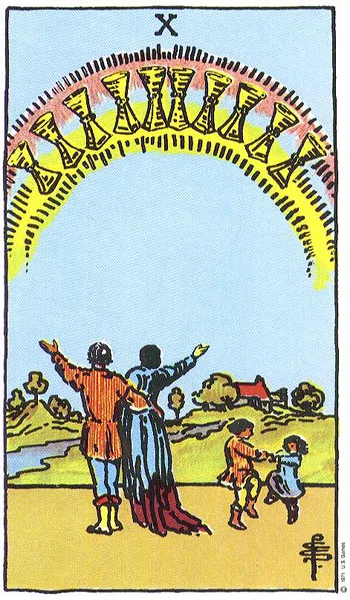
In a walled courtyard, a boy bends to offer a girl a cup planted with white star-shaped flowers. Five more flowering cups stand around them: one on a pedestal, four in a row in the foreground. Behind them rises an old manor house, and a small guard walks away up the lane, leaving the children unwatched. The scene is deliberately out of time: soft light, safe walls, a gift given for no reason except giving. It smells like a memory even before you read it as one.
enam hati: upright meaning
Ing cekak: Ing jaman biyèn, gawéan iki digawé saka kayu utawa kayu kang wis digodhog, banjur dicampur karo banyu.
The past comes bearing gifts. The Six of Cups is nostalgia in its sweet form: a reunion with someone from your history, a return to a childhood place, an old hobby or friendship that resurfaces carrying more warmth than you remembered leaving in it. It is also the card of simple kindness: giving without accounting, the way children share before anyone teaches them exchange rates. When it appears, something from before wants to be revisited: not to trap you there, but because it holds a piece you need now: an old joy, an old friend, an old version of yourself who knew how to play. Accept gifts graciously this season, and give one for no reason at all.
enam hati: reversed meaning
Ing cekak: Ing jaman saiki, ora ana sing bisa ngrampungaké masalah iki; ora ana sing bisa ngrampungaké masalah iki.
Reversed, the memory stops giving and starts holding. Nostalgia curdles into residence: comparing every present moment to an edited past, an ex remembered at their best and missed at their worst, childhood replayed as either paradise lost or wound unhealed, and both readings running the show today. Sometimes the card marks the necessary opposite: leaving the hometown, outgrowing the old circle, releasing traditions that no longer fit, with all the guilt that entails. Its reversed question is exact: is the past a place you visit, or a place you live? Visit as often as you like. Living there costs you the only tense anything actually happens in.
enam hati: love & relationships
Tegak
Someone from the past may return: an old flame, a childhood friend turned suddenly interesting, or a partner reconnecting with the playful early self they were when you met. This card favors reunions and rekindling more than almost any other, and in existing relationships it prescribes remembering on purpose: revisit the first date, retell the origin story. Sweetness is a practice, not an era.
Dibalik
An old relationship is holding the present hostage: the ex you compare everyone to, the pattern from childhood replaying with new casting. Rekindled romances under this reversal tend to repeat rather than resume. Be precise about what you miss: the person, or who you were then? Those call for completely different next steps.
enam hati: kariré & dhuwit
Tegak
Kabèh iku bisa digawé kanthi cara sing gampang lan gampang.
Dibalik
Professional nostalgia as an anchor: the glory days of a previous role making every current job feel lesser, or returning to an old employer out of comfort rather than fit. The market has moved; some old skills need honest updating rather than fond retelling. Mine the past for contacts and lessons, then face forward. Your best era is not required to be behind you.
enam hati: ya utawa ora?
Ya.
Yes, a gentle one, with the past's blessing. The Six of Cups favors questions about reunions, reconciliation, family matters, gifts, and anything that reconnects you with what once made you happy. If you asked whether someone or something from before will return, this card leans distinctly yes. Its only hedge: make sure you want the reality back, not just the memory of it.
Kartu sing gegayutan
Takon kang asring diajukake
Apa kartu iki bakal nemokaken sampeyan dina iki?
Nglebokaké kartu iki ing maca langsung →