Kouch · 6 nan Cups
Six of Cups Tarot Card siyifikasyon an
- Vertikal
- nostalgietimouninnosansre-entèvansyonbonte remake
- Retounen
- rete nan tan lontanmemwa ki gen koulè rosekite kay la dèyèblese timoun ki nan kè a
- Wi oswa Non
- Wi
- Eleman
- Water
- Astrologi
- Sun in Scorpio
Ki sa kat la montre
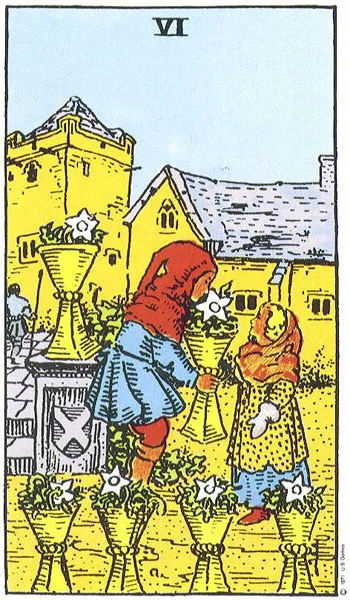
Nan yon patiraj ki gen miray, yon ti gason koube tèt li pou l ofri yon ti fi yon ti gout ki plante ak flè blan ki gen fòm yon stele. Pifò ti gout ki gen fòm yon stele ap chita sou yon pedestal, kat lòt sou yon liy nan devan. Nan dèyè yo, yon kay ansyen woule, yon ti gad monte sou wout la, li kite timoun yo san yo pa gade. Se yon senaryo ki pa gen tan: limyè mou, miray ki an sekirite, yon kado ki bay san rezon, men ki bay. Li santi tankou yon memwa menm anvan ou li l.
Six of Cups: upright meaning
Nan kout: The past comes bearing gifts: a sweet reunion or old comfort resurfaces, so enjoy the warmth.
The past comes bearing gifts. The Six of Cups is nostalgia in its sweet form: a reunion with someone from your history, a return to a childhood place, an old hobby or friendship that resurfaces carrying more warmth than you remembered leaving in it. It is also the card of simple kindness: giving without accounting, the way children share before anyone teaches them exchange rates. When it appears, something from before wants to be revisited: not to trap you there, but because it holds a piece you need now: an old joy, an old friend, an old version of yourself who knew how to play. Accept gifts graciously this season, and give one for no reason at all.
Six of Cups: Retounen
Nan kout: Nostalji te vin viv nan yon pase edite; sispann mezire prezan kont li.
Reversed, the memory stops giving and starts holding. Nostalgia curdles into residence: comparing every present moment to an edited past, an ex remembered at their best and missed at their worst, childhood replayed as either paradise lost or wound unhealed, and both readings running the show today. Sometimes the card marks the necessary opposite: leaving the hometown, outgrowing the old circle, releasing traditions that no longer fit, with all the guilt that entails. Its reversed question is exact: is the past a place you visit, or a place you live? Visit as often as you like. Living there costs you the only tense anything actually happens in.
Six of Cups: Love & relasyon
Vertikal
Someone from the past may return: an old flame, a childhood friend turned suddenly interesting, or a partner reconnecting with the playful early self they were when you met. This card favors reunions and rekindling more than almost any other, and in existing relationships it prescribes remembering on purpose: revisit the first date, retell the origin story. Sweetness is a practice, not an era.
Retounen
An old relationship is holding the present hostage: the ex you compare everyone to, the pattern from childhood replaying with new casting. Rekindled romances under this reversal tend to repeat rather than resume. Be precise about what you miss: the person, or who you were then? Those call for completely different next steps.
Six of Cups: Kariè & lajan
Vertikal
The past pays dividends: a former colleague brings an opportunity, an old employer calls back, an abandoned skill turns out to be exactly what the current project needs. Work involving children, education, nostalgia, or heritage is especially favored. Financially, gifts, inheritances, and help from family carry this card's energy: receive them without shame.
Retounen
Professional nostalgia as an anchor: the glory days of a previous role making every current job feel lesser, or returning to an old employer out of comfort rather than fit. The market has moved; some old skills need honest updating rather than fond retelling. Mine the past for contacts and lessons, then face forward. Your best era is not required to be behind you.
Six of Cups: Wi oswa non?
Wi.
Yes, a gentle one, with the past's blessing. The Six of Cups favors questions about reunions, reconciliation, family matters, gifts, and anything that reconnects you with what once made you happy. If you asked whether someone or something from before will return, this card leans distinctly yes. Its only hedge: make sure you want the reality back, not just the memory of it.
Kat ki gen rapò
Kesyon ki poze souvan
Èske kat sa a ka jwenn ou jodi a?
Tire kat sa a nan yon lekti viv →