زێڕ · 10 _لە Wands
ده ی خاڵ مانای کارتی تارۆت
- _پشت
- باری زۆر، کێشانی هەموو شتێک، ئەرک، درێژەی کۆتایی، سەرکەوتن بوو بە قورس
- گێڕەوە
- داخستنی، ڕەوانەکردن، تێکچوون، ئازادکردن
- بەڵێ یان نا
- نا
- بەش
- Fire
- ئاسۆناسی
- Saturn in Sagittarius
چی نیشان دەدات
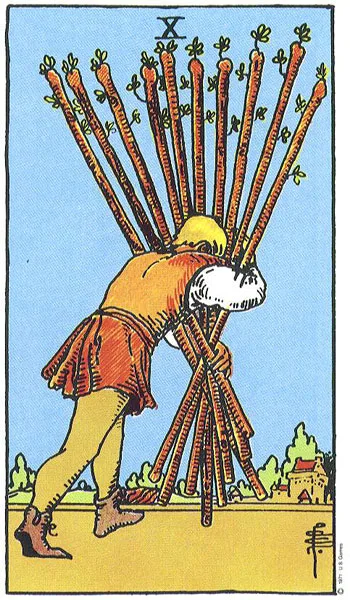
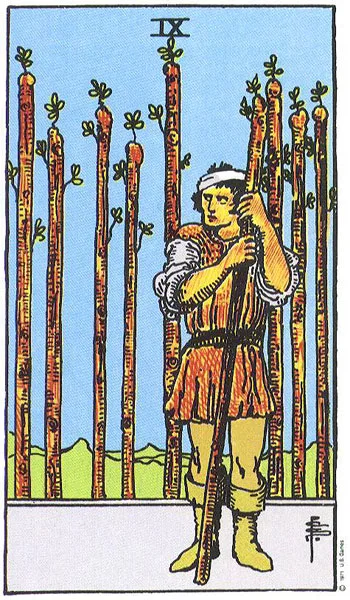
A man carries all ten staves at once, bundled awkwardly in his arms so that they block his own view of the road. He is bent forward under them, walking toward a town that sits close on the horizon: the destination is genuinely near. Nothing in the image forces him to carry every stave in one trip; that was a choice, made so long ago it no longer feels like one. The card is effort at the exact point where it stops being noble.
ده ی خاڵ: ڕاستی
بە کورتی: You're carrying far more than you have to: most of this load is optional, so start setting some down.
The load is real, and most of it is optional. The Ten of Wands is what success becomes when you never learn to decline: every project accepted, every favor absorbed, every responsibility bundled onto one back until the work of carrying crowds out the reason for the journey. Saturn in Sagittarius is exactly this: duty strapped onto a fire that wanted to run free. The card acknowledges you are close; the town is right there, and sometimes the honest advice is simply to finish the haul. But it insists you look at the bundle. Which staves are yours? Which did you pick up because no one else moved fast enough? Deliver the load, then stop restocking it.
ده ی خاڵ: مانای گێڕاوەتەوە
بە کورتی: کێشی یان دادەبەزێت یان بەئاگاییەوە دادەبەزێت؛ پشتیوانی بکهو بڵێ: واز بهێنه، بهئاگاییەوە نهڵێ.
. وابزانم ئه گه رم ئه گه رم ئه گه رم ئه گه رم ئه گه رم ئه گه رم ئه گه رم ئه گه رم ئه گه رم ئه گه رم ئه گه رم ئه گه رم ئه گه رم ئه گه رم ئه گه رم ئه گه رم ئه گه رم ئه گه رم ئه گه رم ئه گه رم ئه گه رم ئه گه رم ئه گه رم ئه گه رم ئه گه رم ئه گه رم ئه گه رم ئه گه رم ئه گه رم ئه گه رم ئه گه رم ئه گه رم ئه گه رم ئه گه رم ئه گه رم ئه گه رم ئه گه رم ئه گه رم ئه گه رم ئه گه رم ئه گه رم ئه گه رم ئه گه رم ئه گه رم ئه گه رم ئه گه رم ئه گه رم ئه گه رم ئه گه رم ئه گه رم ئه گه رم ئه گه رم ئه گه رم ئه گه رم ئه گه رم ئه گه رم ئه گه رم ئه گه رم ئه گه رم ئه گه رم ئه گه رم ئه گه رم ئه گه رم ئه گه رم ئه گه رم ئه گه رم ئه گه رم ئه گه رم ئه گه رم ئه گه رم ئه گه رم ئه گه رم ئه گه رم ئه گه رم ئه گه رم ئه گه رم ئه گه رم ئه گه رم ئه گه رم ئه گه رم ئه گه رم ئه گه رم ئه گه رم ئه گه رم ئه
ده ی خاڵ: خۆشەویستی و پەیوەندی
_پشت
یەکێک لە کەسەکان پەیوەندییەکە هەڵدەگرێت پلان دان، کارکردنی هەستی، کارکردنی چاککردنەوە دوای هەر ململانێیەک. لەوانەیە خۆشەویستی بێت، بەڵام هەروەها باریشە، وە ئەو کەسەی کە باری دەگرێت زۆر بەتاڵە بۆ ئەوەی خۆشی لەو کەسە ببینێت کە بۆی دەیکات. پاشەکەوت بکە پێش ئەوەی کە ناڕەزایی تەواو بێت. ئەرک وەک بەخشین نیە.
گێڕەوە
هاوسەرێکی زۆر باری قورس، یان لە کۆتاییدا بەرپرسیارێتیەکانی دەگەڕێنێتەوە، یان بە بێدەنگی لە پەیوەندییەکەیدا دەڕوات. ئەگەر شتەکان قورس بوون، ئەوە کاتی ئەوە دێت کە بە ڕاستگۆیی گفتوگۆ لەسەر ڕۆڵەکان بکەیت، نەک چاوەڕێی هەموو ڕێککەوتنێک بکەیت کە دەڕوات. هەندێ جار ئەمە نیشانەی ئازادبوونە دوای جیابوونەوە: غەم، بەڵام هەروەها ئاسانی.
ده ی خاڵ: کار و پارە
_پشت
You are the person everything gets routed to, and it is costing you. Overtime normalized, scope creeping, three roles under one title, often because competence gets rewarded with more weight rather than more money. Finish the current commitment if the end is genuinely near, then renegotiate: fewer staves or a heavier paycheck. Financially, debts and obligations need consolidating, not accumulating.
گێڕەوە
Either delegation finally happens (a team hired, a workload rebalanced, a role right-sized) or something drops publicly: the missed deadline, the resignation written at midnight. Get ahead of it. Offload the two heaviest obligations this week, and stop measuring your worth by tonnage carried.
ده ی خاڵ: باشه یان نا؟
نا.
No, not because the goal is impossible, but because the current path to it costs more than the answer is worth. The Ten of Wands answers questions about taking on more with a flat no, and questions about continuing as-is with 'not like this.' If you can radically lighten the load first, ask again; carried this way, the yes you want turns into another stave.
کارتەکانی پەیوەندیدار
پرسیاری زۆر کراوە
ئایا ئەم کاردانە ئەمڕۆ تۆ دەدۆزێتەوە؟
ئەم کاردە هەڵبگرە لە خوێندنەوەیەکی ڕاستەوخۆدا →