Makilen irudia · 10 edo Wands
hamarko pika Tarot kartaren esanahia
- Bertikalki
- gainkargadena eramateabetebeharraazken zatiaarrakasta astun bihurtu da
- Alderantzizkoa
- jaitsidelegatukolapsatuaskatu
- Bai edo ez
- Ez
- Elementua
- Fire
- Astrologia
- Saturn in Sagittarius
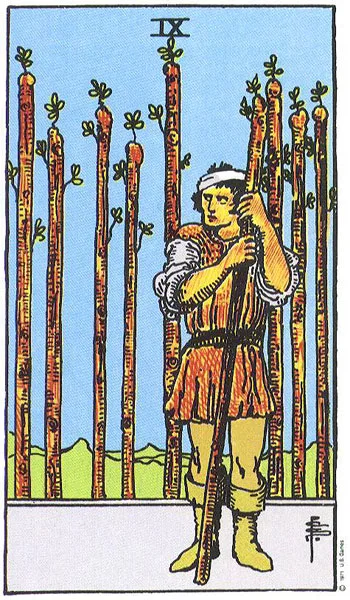
Txartelak erakusten duena
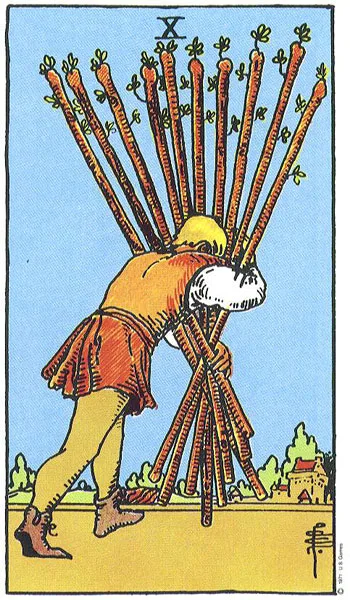
Gizon batek hamar makila guztiak aldi berean daramatza, besoetan aspergarriki lotuta, bidearen ikuspegia oztopatzen dioten arte. Makil horien azpian makurturik dago, zeruan hurbil dagoen herri baterantz doa, helmuga benetan hurbil dago. Irudian ez dago ezerk behartzen duenik makila guztiak bidaia batean eramatera; hau aukera bat izan zen, hain aspaldi egina, ezen jadanik ez dela bat bezala sentitzen. Karta ahalegina da, noblezia galdu duen puntuan.
hamarko pika: upright meaning
Laburbilduz: Hau da, gehienez ere, 1000 puntu lortu behar dira, eta gehienez ere, 1000 puntu lortu behar dira, eta, beraz, 1000 puntu lortu behar dira.
Karga erreala da, eta gehiena aukerakoa. Makila Hamarrak arrakasta bihurtzen da inoiz uko egiten ez ikasten duzunean: proiektu guztiak onartu, mesede guztiak xurgatu, ardura guztiak bizkarrean lotu, jendetza eramateko lanak bidaiaren arrazoia bihurtu arte. Saturno Sagittariusen horixe da, hain zuzen ere: betebeharra suari lotuta, aske irten nahi zuena. Kartak hurbil zaudela onartzen du; hiria hantxe dago, eta batzuetan aholku zintzoa da garraioa amaitzeko. Baina multzoari begiratzen diozu. Zein makila dira zureak? Zein hartu zenituen beste inork behar bezain azkar mugitzen ez zelako? Karga entregatu, eta gero utzi berriro betetzeari.
hamarko pika: alderantzizko esanahia
Laburbilduz: Zaila da, baina, zerbait esatea, edota zerbait esatea, edota zerbait esatea, edota zerbait esatea, edota zerbait esatea, edota zerbait esatea, edota zerbait esatea.
Reversed, the bundle either drops or gets put down, and the difference matters enormously. The good version is release: delegating at last, resigning from the committee, saying the overdue no, feeling your spine unbend. The hard version is collapse: the back gives out, the deadline blows, the burnout arrives with interest because the load was never voluntarily reduced. Reversed, this card is usually the last warning before the choice gets made for you. There is also a quieter reading: carrying burdens invisibly, insisting you are fine while visibly buckling. Whoever you are protecting from the truth is not being protected.
hamarko pika: maitasuna eta harremanak
Bertikalki
Pertsona batek erlazioa darama, planifikazioa, lan emozionala, eztabaida bakoitzaren ondorengo konponketa lana. Maitasuna izan daiteke, baina zama ere bada, eta zamatzailea makurregia da haren azpian, pertsonagatik egiten duena gozatzeko. Birbanatu haserreak handitzen amaitu aurretik. Betebeharra ez da dedikazioa.
Alderantzizkoa
Bikotekide gaizki kargatua amaitutzat ematen da, edo azkenean erantzukizunak itzultzen ditu, edo isiltasunez erlazioa gainditzen du. Gauza gogorrak sentitu badira, unea da rol-banaketa zintzotasunez berriro negoziatzeko, akordio osoa erori egiten dela ikusi beharrean. Batzuetan, hautsi ondoren askatasuna adierazten du: pena, baina baita arinagoa ere.
hamarko pika: karrera eta dirua
Bertikalki
You are the person everything gets routed to, and it is costing you. Overtime normalized, scope creeping, three roles under one title, often because competence gets rewarded with more weight rather than more money. Finish the current commitment if the end is genuinely near, then renegotiate: fewer staves or a heavier paycheck. Financially, debts and obligations need consolidating, not accumulating.
Alderantzizkoa
Either delegation finally happens (a team hired, a workload rebalanced, a role right-sized) or something drops publicly: the missed deadline, the resignation written at midnight. Get ahead of it. Offload the two heaviest obligations this week, and stop measuring your worth by tonnage carried.
hamarko pika: Bai edo ez?
Ez.
Ez, ez helburua ezinezkoa delako, baizik eta oraingo bidea erantzuna baino garestiagoa delako. Makila Hamarrak gehiago hartzeko galderei ezetz garbiarekin erantzuten die, eta egoeran jarraitzeko galderei 'ez horrela'rekin. Karga erradikalki arintzeko gai bazara lehenik, galdetu berriro; horrela eramana, nahi duzun baiezkoa beste puska batean bihurtzen da.
Erlazionatutako txartelak
Maiz egiten diren galderak
Txartelak aurkituko zaitu gaur?
Eraman txartela irakurketa zuzenean →