زێڕ · 5 _لە Wands
پێنجی زێڕ مانای کارتی تارۆت
- _پشت
- ململانێ، ململانێ، ئاژاوە، ململانێ، ململانێ
- گێڕەوە
- خۆ دوورگرتن لە ناکۆکی، تێکشکاندنی گرژییەکان، شەڕی ناوەوەی، هەڵبژاردنی شەڕەکەت
- بەڵێ یان نا
- نا
- بەش
- Fire
- ئاسۆناسی
- Saturn in Leo
چی نیشان دەدات
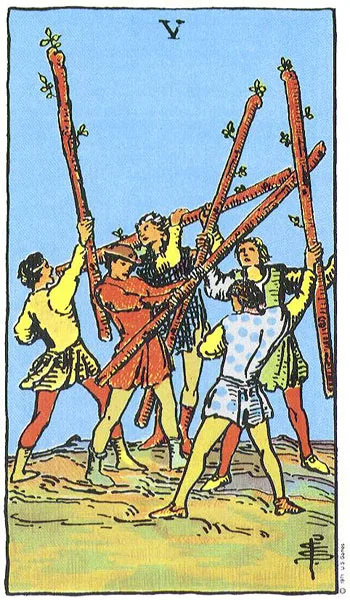
Five young men swing five staves in a chaotic tangle, each striking at nothing in particular. Look closely and no one is actually hurt: no blood, no fallen figure, staves clacking against staves rather than bodies. Their clothes are all different, five uniforms for five agendas. It reads as much like a rowdy training bout as a battle, and that ambiguity is the card's whole question: is this fight real, is it practice, or is it just noise?
پێنجی زێڕ: ڕاستی
بە کورتی: هەمووان لە رق و کینەدان و کەس گوێ ناگرێت، ئەمە زیاتر لە مەترسی ڕاستەقینە، بۆیە ئەوە بە کەسی نەگرە.
Everyone is talking and nobody is listening. The Five of Wands is friction: competing egos, rival bids, a team pulling in five directions, the group chat on fire over something that will not matter in a month. Saturn in Leo grinds authority against pride. The useful truth inside the card: this conflict is usually more noise than damage, and sometimes it is even productive, the way sparring sharpens a fighter. Competition can surface the best idea if someone imposes rules on the scrum. But do not mistake motion for progress. Ask what is actually being decided here, and whether you need to be in the middle of it.
پێنجی زێڕ: مانای گێڕاوەتەوە
بە کورتی: ململانێکە بەرەو کۆتایی دێت یان چووەتە ناوەوە؛ دیاری بکە کامە لە ئامانجە دژبەیەکەکانت لە ڕاستیدا ئامانجی تۆیە.
وابەستە بە دۆخی ئێستا، شەڕەکە بەرەو ناوەوە دەچێت، یان ناکۆکیەکە لە کۆتاییدا تێکدەچێت و بیری ساردتر سەردەکەوێت، یان ناکۆکیەکە بەرەو ناوەوە دەچێت و تۆ شەڕ لەگەڵ خۆت دەکەیت: ئامانجە دژبەیەکەکان، ئەرکەکان، و ناسنامە هەموویان لە ناو یەک مێشکدا دەناڵێنن. هەروەها چاودێری بۆ دوورکەوتنەوە لە ناکۆکی بە پۆشاکی ئاشتی، ئەو گرژییەی تۆ ڕەت دەکەیت ناوی لێبنێیت، نامێنێت، تەنها لە ژێر مێزی کۆبوونەوەکەدا دەڕوات. وابەستەبوون داوات لێدەکات کە بە مەبەست کۆتایی بە کێشەکە بهێنیت. خاڵەکانی کەم گرنگی بدە، ناوی ڕاستەقینەی بنێ، و تەنها بۆ ئەوە شەڕ بکە.
پێنجی زێڕ: خۆشەویستی و پەیوەندی
_پشت
Bickering, rivalry, or genuine competition for someone's attention. In couples, small disagreements are multiplying: usually not one big issue but five little ones fighting for airtime. If dating, you may be one of several suitors and can feel it. Some friction is chemistry; the test is whether arguments resolve anything or just repeat.
گێڕەوە
Either the storm is passing (a period of quarrels finally exhausting itself) or conflict is being swallowed instead of spoken, which is worse. Resentment that never gets a hearing curdles. If the relationship has gone suspiciously smooth after a rough patch, check whether things were resolved or merely dropped.
پێنجی زێڕ: کار و پارە
_پشت
A competitive arena: rival candidates for the role, departments fighting over budget, a meeting culture where the loudest draft wins. Handled well, the contest can raise everyone's game. Financially, beware bidding wars and ego purchases: competition makes people overpay. Bring rules, criteria, and a referee to any decision currently being made by volume.
گێڕەوە
لە شوێنی کاردا، گرژییەکان یان کەم دەبنەوە یان دەچنە ژێر زەوی و دەبنە بێدەنگی، رێکخراو، و تێکدانی بێدەنگی. ئەگەر تۆ لە رقی ناوخۆیی توشی بێزاری بوویت، ئەم کارتە پشتگیریی ئەوە دەکات کە تۆ لە رقی ناوخۆیی دەربچیت کە هیچ کات بەهای بردنەوە نەبووە. وزەکەت بگەڕێنە بۆ ئەو شەڕە پیشەییەی کە بەڕاستی پێشت دەهێنێت.
پێنجی زێڕ: باشه یان نا؟
نا.
Lean no. The Five of Wands says the path to what you asked about runs through conflict, competition, and scattered effort: achievable perhaps, but contested at every step and probably more costly than it looks. If your question was about harmony, agreement, or an easy outcome, the answer is no for now. Reduce the number of battles first, then ask again.
کارتەکانی پەیوەندیدار
پرسیاری زۆر کراوە
ئایا ئەم کاردانە ئەمڕۆ تۆ دەدۆزێتەوە؟
ئەم کاردە هەڵبگرە لە خوێندنەوەیەکی ڕاستەوخۆدا →