Trazo de varillas · 6 de Wands
seis de paus Significado das cartas do tarot
- Vertical
- vitoriarecoñecementoéxito públicoconfianzao desfile
- Invertido
- gañadores privadosrecoñecemento atrasadoinflación do egomedo ao foco
- Si ou Non
- Si
- Elemento
- Fire
- Astroloxía
- Jupiter in Leo
O que mostra a tarxeta
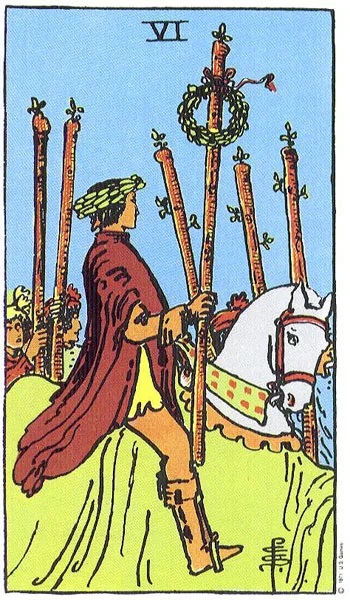
A rider on a white horse moves through a crowd, his staff crowned with a laurel wreath and a second wreath circling his head. Around him, others raise their own staves in salute: the victory is his, but the crowd has agreed to it. The horse wears a rich green mantle; the rider looks straight ahead, composed rather than gloating. This is not the battle. This is the parade after, the moment success becomes public and witnessed.
seis de paus: significado vertical
En resumo: Gañaches e a xente viu, acepta o recoñecemento en lugar de encollerte do centro das miradas.
You won, and people saw. The Six of Wands is victory made visible: the promotion announced, the work praised in front of the room, the result that finally matches the effort. Jupiter in Leo is generous, warm-hearted success: recognition that expands you rather than isolating you. Take the parade; deflecting every compliment is not humility, it is a refusal to complete the win. The card carries one quiet caution built into its own image: the rider is still on the horse, still in public. Enjoy the wreath without believing you have finished. Momentum this good is for spending, not framing.
seis de paus: significado inverso
En resumo: A vitoria pasou desapercibida ou non podes deixar que che sinta; reclama o crédito que se escapou.
Reversed, the wreath slips. Maybe the win happened but nobody noticed: you delivered and the credit drifted elsewhere, or the announcement keeps being delayed. Maybe the win is real but you cannot let yourself feel it, dreading the visibility that comes with it. Or the inversion is ego: success inhaled too deeply, a victory lap that has gone on so long it became the whole route. Reversed, the card asks whose recognition you are actually living for. A win only you know about is still a win. Applause you had to chase is not quite one.
seis de paus: amor e relacións
Vertical
Unha relación que merece ser mostrada, que se fai pública, que se reivindica con orgullo, a parella que celebra os teus éxitos en vez de medilo. Se estás solteiro, a confianza é a túa mellor característica neste momento; estás a ser notado máis do que pensas. Esta carta a miúdo marca a fase na que dúas persoas deixan de facer probas e comezan a apoiarse mutuamente.
Invertido
As vitorias dalgúns non se celebran, ou a relación é perfecta en público e baleira en privado. Observe unha dinámica na que un dos compañeiros precisa ser o cabaleiro e o outro a multitude permanente. O amor non é un podio. Pregunte se a admiración flúe en ambas direccións, e se o aplauso é para a parella ou para a imaxe dela.
seis de paus: carreira e cartos
Vertical
Recognition arrives: the promotion, the award, the client won in open competition, the launch that lands. Your reputation is compounding: leverage it while it is warm, because visibility opens doors that effort alone cannot. Financially, a rewarded position or a raise is well-favored. Ask for the number that matches the wreath.
Invertido
Credit misdirected, a promotion promised and postponed, or success that looks better on LinkedIn than it feels on Monday. Alternatively, confidence may have outrun delivery: check that the story being told about the work still matches the work. Document your contributions and make the case plainly; visibility rarely corrects itself.
seis de paus: Si ou non?
Si.
Yes, and a public, witnessed yes at that. The Six of Wands is one of the deck's cleanest success cards, signaling victory, recognition, and outcomes that land in your favor where others can see. If you asked about winning, passing, being chosen, or succeeding at something visible, take this as strong encouragement.
Tarxetas relacionadas


Preguntas frecuentes
Esta carta atopárache hoxe?
Tira esta tarxeta nunha lectura en directo →