Makilen irudia · 6 edo Wands
seiko maskara Tarot kartaren esanahia
- Bertikalki
- Garaipenaaitortzaarrakasta publikoakonfiantzadesfilea
- Alderantzizkoa
- irabazi pribatuakaitortza atzeratuaego inflazioaatentzio-zentroen beldurra
- Bai edo ez
- Bai
- Elementua
- Fire
- Astrologia
- Jupiter in Leo
Txartelak erakusten duena
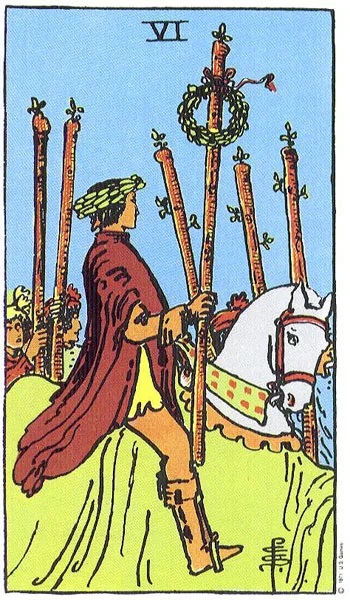
A rider on a white horse moves through a crowd, his staff crowned with a laurel wreath and a second wreath circling his head. Around him, others raise their own staves in salute: the victory is his, but the crowd has agreed to it. The horse wears a rich green mantle; the rider looks straight ahead, composed rather than gloating. This is not the battle. This is the parade after, the moment success becomes public and witnessed.
seiko maskara: upright meaning
Laburbilduz: You won and people saw it: accept the recognition instead of shrinking from the spotlight.
You won, and people saw. The Six of Wands is victory made visible: the promotion announced, the work praised in front of the room, the result that finally matches the effort. Jupiter in Leo is generous, warm-hearted success: recognition that expands you rather than isolating you. Take the parade; deflecting every compliment is not humility, it is a refusal to complete the win. The card carries one quiet caution built into its own image: the rider is still on the horse, still in public. Enjoy the wreath without believing you have finished. Momentum this good is for spending, not framing.
seiko maskara: alderantzizko esanahia
Laburbilduz: Garaipena ez zen konturatu, edo ez zenuen sentitzen utzi behar, eta aldarrikatu zuena.
Reversed, the wreath slips. Maybe the win happened but nobody noticed: you delivered and the credit drifted elsewhere, or the announcement keeps being delayed. Maybe the win is real but you cannot let yourself feel it, dreading the visibility that comes with it. Or the inversion is ego: success inhaled too deeply, a victory lap that has gone on so long it became the whole route. Reversed, the card asks whose recognition you are actually living for. A win only you know about is still a win. Applause you had to chase is not quite one.
seiko maskara: maitasuna eta harremanak
Bertikalki
A relationship worth showing off: going public, being claimed proudly, the partner who celebrates your wins instead of measuring them. If single, confidence is your best feature right now; you are being noticed more than you think. This card often marks the phase where two people stop auditioning and start rooting for each other.
Alderantzizkoa
Norbaitek irabazten badu, ez da ospatzen, edo harremana publikoki perfektua da eta pribatuan hutsa. Begiratu dinamika bat non bikotekide bat txirrindularia izan behar den eta bestea jendetza etengabea. Maitasuna ez da podio bat. Galdetu ea miresmena bi norabidetan doan, eta txaloak bikotearentzat diren edo irudiarentzat.
seiko maskara: karrera eta dirua
Bertikalki
Recognition arrives: the promotion, the award, the client won in open competition, the launch that lands. Your reputation is compounding: leverage it while it is warm, because visibility opens doors that effort alone cannot. Financially, a rewarded position or a raise is well-favored. Ask for the number that matches the wreath.
Alderantzizkoa
Credit misdirected, a promotion promised and postponed, or success that looks better on LinkedIn than it feels on Monday. Alternatively, confidence may have outrun delivery: check that the story being told about the work still matches the work. Document your contributions and make the case plainly; visibility rarely corrects itself.
seiko maskara: Bai edo ez?
Bai.
Bai, eta publikoki baietz esan zuen. Sei makila karta sortako kartarik garbienetako bat da, garaipena, aitortza eta besteek ikusi dezaketen bezala zure alde ateratzen diren emaitzak adierazten ditu. Irabazi, gainditu, aukeratu edo zerbait ikusgarrian arrakasta izanaz galdetu badidazu, hartu hau bultzada sendo gisa.
Erlazionatutako txartelak

Maiz egiten diren galderak
Txartelak aurkituko zaitu gaur?
Eraman txartela irakurketa zuzenean →