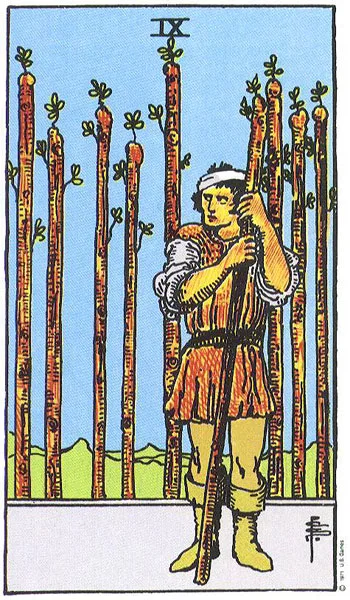
Suit na nDátaí · 9 de Wands
an tSaoi Tarot Cárta Brí
- Ingearach
- athléimneachtbrú seo caitegardacath-thástáilbuanseasmhacht
- Inbhéartaithe
- burnoutparanoiaballaí ró-ardag diúltú cabhair
- Tá nó Níl
- B' fhéidir
- Mír
- Fire
- Astrology
- Moon in Sagittarius
Cad a thaispeánann an cárta
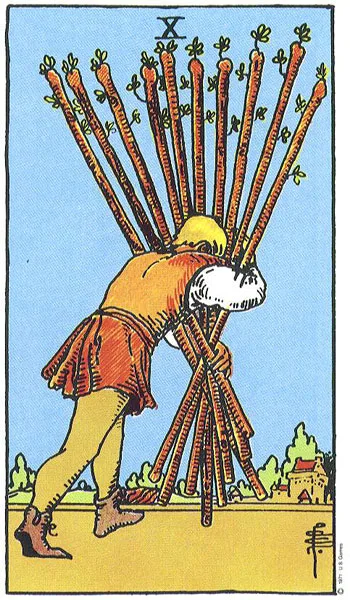
A bandaged man leans on a single stave, eyes sideways, watchful. Behind him eight more staves stand planted in a rough palisade: every fight he has already survived, now fencing him in as much as protecting him. His head wound is wrapped but he is upright, gripping his stave like someone who expects the next round and intends to answer the bell. The card's whole mood lives in that sideways glance: wounded, wary, unbeaten.
an tSaoi: upright meaning
Go hachomair: You're battered and still standing, closer to the finish than you feel. Hold on a little longer.
You are more durable than you feel. The Nine of Wands arrives late in a long fight, after setbacks that would have justified quitting, and finds you still standing, guarded, tired, and closer to the end than you can see. Its message is double. First: the wariness is earned; you learned real lessons and they are armor now. Second: do not stop here. This is the second-to-last card of the suit for a reason: one more push, one more defense, one more week of holding on tends to decide the whole campaign. Rest inside the palisade if you must. Just do not mistake the pause for the finish.
an tSaoi: aistrithe
Go hachomair: Tá an armúr tar éis maireachtáil an cogadh; tá tú ag rith ar fumes agus cabhair a dhiúltú, mar sin lig roinnt de sé síos.
Reversed, the defense has outlived the war. Burnout is the loudest reading: running on fumes, held together by tape and stubbornness, refusing help because accepting it feels like weakness. The subtler reading is armor grown into skin: expecting betrayal everywhere, reading neutral events as attacks, building walls so high nothing gets in, including the good things. Every wound in your history was real; not every stranger is here to add one. The reversal asks you to distinguish vigilance from injury. Put down what you can. Some of what you are guarding stopped being under threat a while ago.
an tSaoi: grá & caidrimh
Ingearach
Loving while braced. Past relationships left marks, and you or your partner approach intimacy like a guarded checkpoint: slow to trust, quick to defend. The card honors that history and still nudges the gate open: the connection in question is likely worth the risk of lowering one stave. Persistence through a rough patch is favored for couples.
Inbhéartaithe
Old wounds running the current relationship: flinching at things your partner never did, tests they cannot pass because the exam was written by someone else. Or sheer relational exhaustion: too tired from past battles to try. Healing may need doing outside the relationship before it can work inside it.
an tSaoi: gairme & airgead
Ingearach
The project is at the grind stage: most of the distance covered, resources thin, motivation thinner, finish line real but not yet visible. Hold. This card strongly favors seeing long efforts through: the qualification, the turnaround, the last quarter of a hard year. Financially, defend what you have built; guard reserves and honor the budget that got you here.
Inbhéartaithe
Burnout in progress, possibly disguised as dedication. Working defensively (hoarding tasks, trusting no one, treating every meeting as an ambush) is a signal, not a strategy. Delegate before something gives, and reassess whether this fight is the career or just a hill someone told you to hold years ago.
an tSaoi: Tá nó níl?
B' fhéidir.
Maybe, with the odds tilting yes for those who persist. The Nine of Wands never promises ease; it promises that the goal is reachable by whoever refuses to quit right before the end. If you have stamina left and the aim still matters, read this as a hard-won yes. If you are asking whether it will happen effortlessly or soon, it will not.
Cártaí gaolmhara
Ceisteanna Coitianta
An bhfaighfeá an cárta seo inniu?
Tarraing an cárta seo i léitheoireacht bheo →