Ko te āhua o nga kōaro · 4 o Cups
Te whā o te kōaro Ko te tikanga o te kāri Tarot
- Tūtū
- apathydiscontentmissed offerwithdrawalreevaluation
- Whakawhitiwhiti
- te whakahoahoa anōte whakarewate whakaae ki te tonote mutunga o te tūkinotanga.
- He, He
- Tērā pea
- Ko te huānga
- Water
- Astrology
- Moon in Cancer
Ko te mea e whakaaturia ana e te kāri
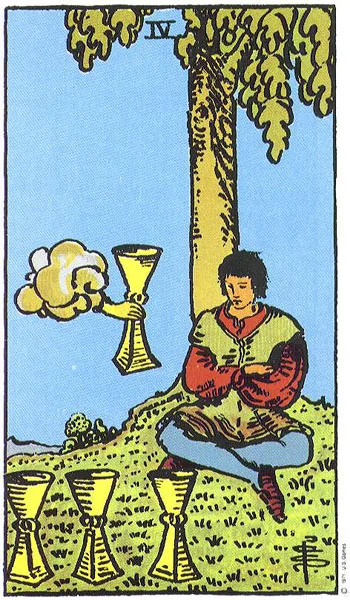
A young man sits under a tree with arms folded and legs crossed, eyes down, the posture of someone who has decided in advance not to be impressed. Three cups stand in the grass before him. From a small cloud at his side, a hand offers a fourth, and he does not look at it. The hill is green, the sky is clear, and nothing whatsoever is wrong in this picture except his attention. That is the card.
Te whā o te kōaro: te tikanga tūtū
I roto i te poto: Nothing appeals right now, even the good things. Notice the offer you're too numb to see.
Nothing tastes like anything right now. The Four of Cups is emotional flatness in the middle of plenty: three perfectly good cups at your feet, a fourth being offered, and no appetite for any of them. Sometimes this is honest fatigue: after intense chapters, the heart withdraws to process, and the folded arms are recovery, not rudeness. But the card carries a gentle warning built into its image: while you are staring at the grass, a real offer is extending from just outside your field of view. Discontent has a way of becoming a posture that outlasts its cause. Take the withdrawal you need, then deliberately lift your eyes and inventory what is actually being offered before concluding there is nothing.
Te whā o te kōaro: ko te tikanga whakarerekē
I roto i te poto: Ka whakarewaina te tūkinotanga, ā, ka hoki mai te kai; kī atu he mea tika ki te whakahauhau i whakakāhoretia e koe i te marama o mua.
Reversed, the trance breaks. Appetite returns: suddenly the offers look like offers again, the numb season lifts, and you accept the invitation you would have declined a month ago. This is the card's most hopeful direction: re-engagement after withdrawal, gratitude coming back online. Occasionally it points the other way: apathy deepening into real isolation, the folded arms hardening into a personality, and then the message is urgent rather than gentle: the withdrawal has stopped being rest and started being a place you live. Either way, the reversal marks movement at the boundary between you and the world. Choose the direction consciously.
Te whā o te kōaro: te aroha me ngā pātahitanga
Tūtū
Emotional checkout. One of you is present in body and absent in attention, or, if single, genuinely uninterested in options others insist are great. Sometimes that boredom is real information about a mismatch; sometimes it is your own depletion wearing the relationship's face. Before deciding the love is stale, check whether anything at all currently interests you. That answer changes the diagnosis completely.
Whakawhitiwhiti
Reawakening: renewed interest in a partner you had been sleepwalking past, or readiness to date again after a long, deliberately closed season. The offer refused before may come around once more, and this time you notice it. If apathy had settled over the relationship, expect a window where re-engagement is genuinely possible. Use it while it is open.
Te whā o te kōaro: mahi me te moni
Tūtū
Demotivation at work: the role is fine, the pay is fine, and you feel nothing. Opportunities may be actively passing you by because boredom has dulled your peripheral vision; the fourth cup at work is often the unglamorous offer that leads somewhere. Before quitting anything, distinguish between a job that empties you and a general emptiness the job is being blamed for.
Whakawhitiwhiti
Motivation returning: the project that finally sparks something, the offer accepted after months of reflexive nos. A period of professional withdrawal ends and the re-entry is favored. Move quickly but modestly: after a numb season, the first step back matters more for momentum than for prestige. Say yes to something concrete this week.
Te whā o te kōaro: He aha, he kore rānei?
Tērā pea.
Maybe, because the honest answer is that you are not really looking. The Four of Cups describes an offer present but unexamined, so its verdict depends on attention you have not yet paid. If you engage fully with what is actually on the table, this maybe converts to a yes more often than not. Asked whether something will simply come to you while you wait with folded arms: no.
E pā ana ki ngā kāri
Ko nga pātai e pā ana
Ka kitea e tēnei kāri koe i tēnei rā?
Ka tangohia tēnei kāri ki roto i tētahi akoranga ora →