Bihotz-irudia · 2 edo Cups
biko bihotza Tarot kartaren esanahia
- Bertikalki
- elkarrekiko maitasunaelkartasunaerakarpena itzulibatasunaberdintasunean elkartzea
- Alderantzizkoa
- desorekaerortzeasentimendu aldebakarrakonfiantza hautsi
- Bai edo ez
- Bai
- Elementua
- Water
- Astrologia
- Venus in Cancer
Txartelak erakusten duena
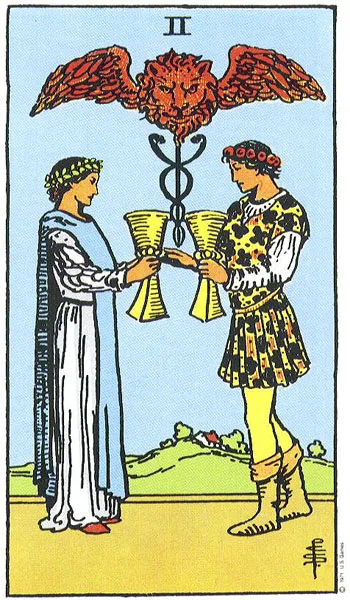
Gizon bat eta emakume bat aurrez aurre daude lurrean, bakoitzak kopa bat eskuan, elkarrizketaren erdian-berak berarengana jotzen du, emakumeak bere begiak topatzen ditu-eta kopa horien gainean Hermesen kaduceoa altxatzen da, suge biki bi hegodun makila baten inguruan, hegodun lehoi gorriaren burua koroatua. Etxe bat dago muinoan atzean. Konposizioan dena simetrikoa da: bi pertsona, bi kopa, begirada zuzen bat. Txartelean inor ez dago inoren gainetik.
biko bihotza: upright meaning
Laburbilduz: Berez, zerbait egiazkoa dela esaten da, eta, beraz, egiazkoa den zerbait, egiazkoa den zerbait da.
What you feel is felt back. The Two of Cups is mutuality: the moment two people look at each other and something audibly clicks into place. Most often it is romantic, the card of real partnership rather than pursuit, but it covers any bond built on level ground: the business partner you trust completely, the friend who feels like family, the reconciliation where both sides actually move. Venus in Cancer is affection that wants a home. What distinguishes this card from mere attraction is the exchange: both cups are offered, both received. If you have been wondering whether a connection is one-way, this card is the deck's clearest no: it flows in both directions.
biko bihotza: alderantzizko esanahia
Laburbilduz: Ematea eta hartzea okertu egin da edo haustura bat izan du; orekatu egin behar da edo haustura zuzen konpondu.
Reversed, the level ground tilts. One person loves more, gives more, apologizes more; the exchange has become a subscription one party quietly stopped paying. Or a genuinely good bond hits a rupture: a fight, a betrayal of trust, a misunderstanding hardening into distance because neither side will cross the room first. The card reversed rarely means the connection is dead; it means the mutuality is broken and pretending otherwise makes it worse. Name the imbalance plainly. Either the exchange gets rebalanced by two people, or you stop pouring into a cup that never pours back.
biko bihotza: maitasuna eta harremanak
Bertikalki
Maitasun irakurketan irakurle gehienek espero duten txartela. Sentimenduak elkarren artean dira, lotura benetakoa da, eta elkarri begiratzean oinarritzen da, elkarri laguntzen baino. Lotura berrietan benetako bateragarritasunaren klika adierazten du; bikoteentzat, hurbiltasuna berreskuratzeko eta truke zintzoa egiteko denboraldia. Proposamenak, konpromisoak eta elkartzeak onartzen dira.
Alderantzizkoa
Balantzeak okertzen dira, bietako batek bientzat sentimenduak daramatza. Edo benetako lotura bat tentsioan dago, inork behar bezala ez konpondu duen haustura baten ondorioz. Alderantziz, karta honek kontu-kontabilitate galdera deseroso bat egiten du: zer ematen duzu, zer itzultzen duzu, eta zenbat denboraz egon da tartea? Elkarren arteko maitasunak ia edozein gauzari aurre egin diezaioke, beti alde bakarrekoa izan ezik.
biko bihotza: karrera eta dirua
Bertikalki
Partnership is the play: a co-founder, a collaborator, a work alliance where trust is real and complementary strengths click. Contracts and agreements formed now tend to be balanced and durable. Financially, ventures shared with the right person outperform solo effort this season, but the card's condition is genuine parity, on paper as well as in spirit.
Alderantzizkoa
A working relationship out of balance: unequal effort, unequal credit, or a handshake deal where the terms were never actually shared. Partnership friction is the message: address the imbalance directly or formalize what was left vague. Do not sign new joint arrangements while resentment from the current one is unresolved.
biko bihotza: Bai edo ez?
Bai.
Yes, and a mutual one. The Two of Cups answers questions about relationships, partnerships, and reconciliation with one of the deck's most reliable affirmatives: the feeling is shared, the alliance is sound, the meeting is real. If your question involves another person, this card says they are meeting you halfway. Its yes weakens only if you already know the exchange is one-sided.
Erlazionatutako txartelak
Maiz egiten diren galderak
Txartelak aurkituko zaitu gaur?
Eraman txartela irakurketa zuzenean →