Ko te āhua o nga kōaro · 1 o Cups
Te āhua o te hau Ko te tikanga o te kāri Tarot
- Tūtū
- te aroha houte whakatuwheratanga ā-ā
- Whakawhitiwhiti
- Ko nga whakaaro whakakorete mokowāte arohate whakawhāititanga ā-āhua.
- He, He
- He
- Ko te huānga
- Water
- Astrology
- Root of Water
Ko te mea e whakaaturia ana e te kāri
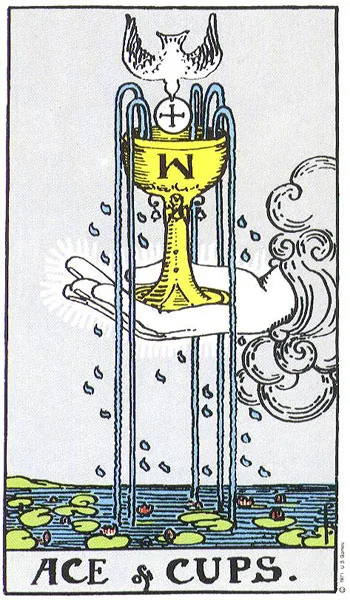
From a cloud, a hand offers a golden chalice that overflows in five streams into a lily pond below. A white dove descends toward the cup carrying a small wafer marked with a cross, and droplets shaped like the Hebrew letter yod hang in the air around it. The water does not stay in the cup: that is the entire image. Whatever this vessel holds exists to spill over, and the pond it feeds is already blooming.
Te āhua o te hau: te tikanga tūtū
I roto i te poto: The heart is opening on its own: new love or tenderness is arriving, so let yourself receive it.
The heart opens before you decide to open it. The Ace of Cups is the beginning of feeling: new love arriving, compassion breaking through where you had been managing, a creative or spiritual tenderness you did not schedule. Like all aces it is an offer rather than a finished story: the cup is held out, and taking it means letting yourself feel more than is convenient. The overflow in the image is instruction. Emotion here is not for hoarding or rationing; it works by circulating: expressed, given, risked. If you have been waiting to feel ready before you let something in, this card says the readiness was never going to come first. The water is already moving.
Te āhua o te hau: ko te tikanga whakarerekē
I roto i te poto: Ka whakatūpato te whakaaro, ka whakatūpato rānei tae noa ki te wā ka ngaro; ka haere te whakaaro i te wā ka whakahaeretia.
Reversed, the cup tips before it reaches you, or you cannot bring yourself to drink. Feelings are present but blocked: love unexpressed until it goes stale, tears that will not come, a numbness where you know an emotion should be. Sometimes it is the opposite jam, emotion flooding everything, spilling on people who did not consent to carry it. Often this card reversed simply marks self-protection that has outlived its threat: a heart kept closed because opening once cost too much. The water is not gone. Start with the smallest honest expression you can manage and let pressure off the vessel gradually.
Te āhua o te hau: te aroha me ngā pātahitanga
Tūtū
Ko tētahi o ngā kāri aroha hou tino mārama i roto i te kāri. Ka tīmata rānei te hono ki te hōhonu ā-ā
Whakawhitiwhiti
Love is present and stuck: feelings held back out of fear, affection given but never received well, or a connection that keeps stalling at the edge of depth. Sometimes it marks giving so much there is nothing left in your own cup. Before deciding the love is gone, check whether it is simply unexpressed. Those are different problems with different solutions.
Te āhua o te hau: mahi me te moni
Tūtū
Work that engages the heart: a role with meaning, a team that becomes genuinely warm, a creative project that starts flowing after a dry season. New beginnings favored here come through people: a colleague's kindness opening a door, work relationships deepening into real alliance. Financially, generosity moves in your favor now; give first without keeping score.
Whakawhitiwhiti
Emotional flatness at work: going through motions in a role that once meant something, or a workplace where feeling anything is treated as unprofessional. Creativity is blocked at the source rather than the skill level. Before changing jobs, try changing what you pour into this one; if nothing refills the cup after a genuine effort, that is your answer.
Te āhua o te hau: He aha, he kore rānei?
He.
Yes, a generous, open-handed yes. The Ace of Cups is offered love, new feeling, and emotional beginnings, which makes it one of the warmest affirmatives in the deck. For questions about love, reconciliation, creative starts, or whether to open up to someone, take this as clear encouragement. The only requirement folded into the yes is receptivity: the cup must actually be accepted.
E pā ana ki ngā kāri
Ko nga pātai e pā ana
Ka kitea e tēnei kāri koe i tēnei rā?
Ka tangohia tēnei kāri ki roto i tētahi akoranga ora →